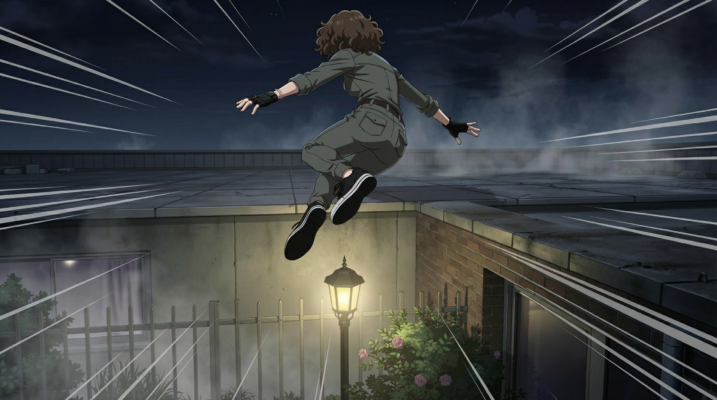
The animation industry has always evolved alongside technology. From hand-drawn frames on paper to digital compositing and real-time rendering, every technical leap has reshaped how stories are told through motion. Today, the industry stands at another turning point: the integration of artificial intelligence into traditional 2D animation workflows.
For many studios, especially those focused on business animations, this shift is not about replacing artists or abandoning craftsmanship. Instead, it is about building a powerful tandem where artificial intelligence enhances traditional animation, making it faster, more flexible, and more scalable without sacrificing artistic identity.
This article explores how artificial intelligence and traditional animation can coexist, how they complement each other in professional studio pipelines, and why their collaboration represents the future of high-quality animation for business, education, and storytelling.
The Foundations of Traditional 2D Animation
Traditional 2D animation is rooted in principles that have remained largely unchanged for decades. Timing, spacing, squash and stretch, anticipation, follow-through, and strong posing are the backbone of expressive motion. These principles are not technical tricks; they are artistic decisions made by animators who understand emotion, rhythm, and visual storytelling.
In business animations, these fundamentals are especially important. Explainer videos, product demos, onboarding content, and brand stories all rely on clarity and emotional resonance. Clean character movement, readable silhouettes, and deliberate pacing help communicate complex ideas simply and effectively.
Despite advances in software, traditional animation remains labor-intensive. Keyframing, in-betweening, cleanup, coloring, and compositing require time, focus, and skilled hands. This is where artificial intelligence begins to play a meaningful role.
Artificial Intelligence as a Creative Tool, Not a Replacement
Artificial intelligence in animation is often misunderstood as a threat to artists. In reality, AI functions best as an assistant rather than an author. It excels at processing large amounts of data, automating repetitive tasks, and offering variations at speed. What it cannot do is replace human taste, narrative intuition, or cultural sensitivity.
In a professional studio environment, AI supports animators by handling technical friction. Tasks such as frame interpolation, rough in-between generation, color matching, lip-sync suggestions, and background variations can be accelerated with machine learning tools. This frees artists to focus on direction, acting, and visual style.
For studios producing business animations at scale, this balance is crucial. Clients expect consistency, brand alignment, and fast turnaround times. Artificial intelligence helps meet these expectations while preserving the handcrafted feel that distinguishes quality animation from generic motion graphics.
Speed and Scalability for Business Animations
One of the strongest arguments for integrating AI into traditional animation workflows is scalability. Business animations are often produced in series: multiple versions for different markets, languages, or platforms. Adjusting timing, replacing text, or adapting scenes can quickly become resource-heavy.
Artificial intelligence can assist by analyzing existing animation data and generating adaptive variations. For example, timing adjustments based on voiceover length or automatic retargeting of character motion for different aspect ratios can significantly reduce production time.
This efficiency does not mean lower quality. On the contrary, when repetitive adjustments are automated, animators can spend more time refining motion, improving storytelling, and ensuring the animation truly serves the business goal behind it.
Preserving Style and Brand Identity
A major concern for brands commissioning business animations is visual consistency. Style is not just an aesthetic choice; it is part of brand recognition. Traditional animation shines here because it allows for intentional imperfections, expressive lines, and unique movement language.
Artificial intelligence can be trained on a studio’s own artwork and animation data, learning specific line qualities, color palettes, and motion preferences. When used carefully, this allows AI-assisted tools to generate outputs that remain faithful to a brand’s visual identity.
The key lies in supervision. Human artists define the style, set the rules, and approve the results. AI simply accelerates adherence to those rules across large volumes of content.
Collaboration Between Animators and AI Systems
The future of animation production is collaborative. Animators, directors, and technical artists work alongside AI systems in a feedback loop. An animator might sketch key poses, allow AI to generate in-betweens, then refine the motion manually. A background artist might design a master environment, then use AI-assisted tools to create variations that maintain perspective and lighting.
This collaboration mirrors other creative industries. In music, photography, and design, AI already assists with editing, enhancement, and iteration. Animation is following the same path, with the added complexity of motion and narrative continuity.
For business animations, this collaboration ensures both efficiency and precision. Deadlines are met without compromising storytelling, and budgets are used more effectively without cutting creative corners.
Ethical and Creative Responsibility
As artificial intelligence becomes more integrated into animation pipelines, studios must take responsibility for how it is used. Transparency with clients, respect for original artwork, and fair recognition of human contribution are essential.
Traditional animation carries cultural and artistic heritage. Preserving this heritage means using AI thoughtfully, not allowing automated processes to flatten style or homogenize visual language. The goal is not to create more content at any cost, but to create better, clearer, and more meaningful animations.
Studios that position AI as a supportive tool rather than a replacement for artists are more likely to build sustainable creative cultures and long-term client trust.
The Competitive Advantage for Animation Studios
Studios that successfully combine artificial intelligence with traditional animation gain a significant competitive advantage. They can offer faster turnaround times, flexible production pipelines, and consistent quality across projects. This is particularly valuable in the growing market for business animations, where companies demand both creativity and efficiency.
Clients are not simply buying animation; they are investing in communication. A studio that can clearly explain how AI-enhanced workflows improve reliability, scalability, and creative focus stands out in a crowded market.
At the same time, maintaining a strong traditional animation foundation reassures clients that their content will not feel generic or automated. The human touch remains visible in every frame.
Looking Ahead: The Future of the Tandem
The relationship between artificial intelligence and traditional animation is still evolving. Tools will become more sophisticated, interfaces more intuitive, and integration more seamless. However, the core dynamic is unlikely to change: AI will handle speed and structure, while humans provide meaning and emotion.
For studios specializing in business animations, this tandem represents an opportunity rather than a challenge. By embracing new technology without abandoning artistic principles, studios can deliver animations that are efficient, expressive, and strategically effective.
The future of animation does not belong exclusively to machines or to tradition. It belongs to the collaboration between them. Artificial intelligence and traditional animation form a tandem that combines efficiency with artistry, automation with intention, and scalability with style.
For modern animation studios, especially those focused on business animations, this collaboration is not optional. It is the path forward. By investing in both human talent and intelligent tools, studios can shape a future where animation remains a powerful, creative, and meaningful medium for communication.