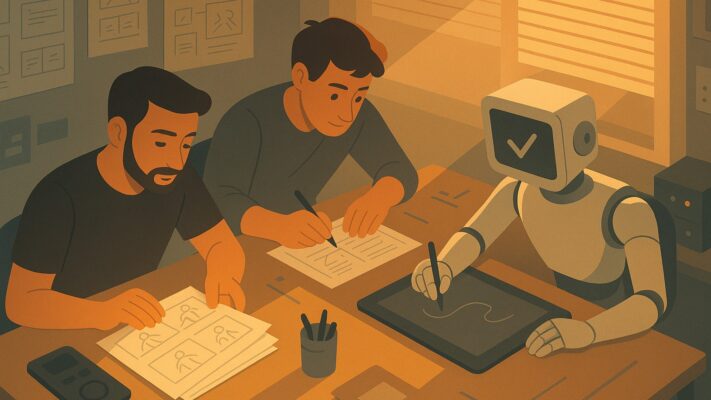
The magic of 2D animation has always lived in the details: the expressiveness of hand-drawn characters, the rhythm of movement, the warmth of imperfection. It’s the craft of making still images feel alive — frame by painstaking frame. But in today’s rapidly evolving creative landscape, even the most cherished traditions can benefit from innovation. Enter artificial intelligence.
AI is not here to replace animators. It’s not a shortcut, a cheat code, or a soulless automation machine. Instead, AI is a powerful set of tools that can support, accelerate, and even elevate the artistry of traditional 2D animation — when used with intention and creativity.
Let’s break down how AI is reshaping the 2D animation pipeline without compromising what makes it special.
Boosting Efficiency Without Killing the Craft
Traditional 2D animation is notoriously time-consuming. A single second of animation can require 12 to 24 drawings. In a full-length feature, that adds up to thousands of hand-drawn frames. It’s a labor of love — but it’s also a logistical nightmare when deadlines are tight and budgets are lean.
AI tools can help streamline parts of the workflow without interfering with the artistic core. For example:
- Inbetweening Automation: AI can assist in generating inbetween frames based on key poses. Tools like DeepMotion or Adobe’s experimental inbetweening algorithms can fill the gaps between hand-drawn extremes, helping animators focus on storytelling and key expressions rather than repetitive tasks.
- Cleanup Assistance: AI can help clean up rough sketches by stabilizing line weight, reducing jitter, and enhancing consistency across frames — all while preserving the animator’s original intent.
- Color Fill and Shading: Smart fill tools powered by AI can auto-detect regions and apply color schemes faster and more accurately than manual processes. Some AI models can even simulate hand-painted styles or dynamic lighting effects based on the context of the scene.
These enhancements don’t remove the animator from the process — they remove the friction, allowing more energy to be spent on creativity rather than repetition.
Style Transfer and Visual Experimentation
Style is everything in 2D animation. From the bold lines of comic-inspired animation to the soft watercolors of indie shorts, each project has its own visual voice. AI enables faster exploration of visual directions without the need to redraw entire sequences.
Using machine learning techniques like neural style transfer, animators can:
- Apply different visual textures to existing frames.
- Test multiple aesthetics with minimal manual rework.
- Quickly prototype how a scene would look in different art styles before locking it down.
While final polishing and adjustments still rely on the human touch, AI gives animators a sandbox for experimentation — and a faster way to communicate visual ideas to directors, clients, or collaborators.
Smart Lip Syncing and Dialogue Animation
Lip syncing is a technical art. Matching a character’s mouth shapes (visemes) to spoken audio requires frame-by-frame precision and can eat up a huge chunk of production time.
AI-powered tools can now automate lip sync with impressive accuracy. Given a voice track and a character rig or set of mouth shapes, AI can:
- Detect phonemes in audio.
- Generate corresponding viseme sequences.
- Align mouth movement with emotion and speech cadence.
This isn’t just a time-saver — it’s also a consistency booster. AI-generated lip sync can be reviewed and tweaked by animators, giving them a strong starting point without locking them into rigid templates.
Motion Tracking and Rotoscoping
Need to animate a character that mimics real-world motion? AI-driven motion tracking and rotoscoping tools can analyze video footage and extract motion data that can be applied to 2D characters.
This is especially useful for:
- Dance sequences
- Action choreography
- Naturalistic movement references
Instead of manually tracing every frame, animators can use AI to generate a base layer of motion, then stylize or exaggerate it to fit the tone and rhythm of the animation.
AI as a Creative Partner, Not Just a Tool
Some of the most exciting uses of AI in animation aren’t just about automation — they’re about inspiration.
Generative models like DALL·E, Midjourney, and Stable Diffusion can be used to:
- Generate concept art ideas based on text prompts.
- Explore visual moods and compositions.
- Inspire character designs or background settings.
While the results are never “final” art, they can spark new directions or unblock creative ruts. AI becomes a collaborator — offering ideas, not answers.
Some studios have even started using AI to draft animatics or rough cuts of scenes, helping directors visualize timing, pacing, and layout before diving into full production.
Preserving the Human Element
The core fear many animators share is that AI will flatten the soul of animation — replacing nuance with generic smoothness, or removing the charm of imperfect lines.
But the best use of AI in 2D animation respects boundaries. It augments, not overrides. The emotional heart of animation — the eyes, the gestures, the timing — still comes from human hands and intuition. AI just makes it easier to get there faster, or to iterate more before committing.
Some studios now use AI for non-final passes — such as quick scene visualization, internal reviews, or test animations — and then rely on artists to refine and finalize the look. This keeps quality high without sacrificing momentum.
Accessibility and Democratization
One of the most overlooked benefits of AI in animation is how it lowers the barrier to entry.
Aspiring animators who don’t have a full team or years of training can now:
- Animate characters using simple voice recordings and templates.
- Use motion capture on a smartphone to drive 2D puppets.
- Clean up their animations with AI-assisted tools.
This doesn’t mean everyone becomes a professional overnight. But it does mean more voices can enter the medium — and more stories can be told without giant budgets.
For small studios, indie creators, and students, this is a game-changer.
Challenges, Ethics, and Artistic Ownership
Of course, AI in animation isn’t without its downsides. Key concerns include:
- Style mimicry without consent: AI models trained on other artists’ work can lead to ethical gray areas if used irresponsibly.
- Job displacement: Automation of certain tasks could reduce demand for entry-level animation roles if not managed properly.
- Loss of creative control: Relying too heavily on AI suggestions can lead to homogenization.
2D animation studios need to build clear policies on how AI is used, what data it’s trained on, and how artists are credited. Transparency matters
Ultimately, AI should serve the creative vision — not drive it.
A New Era of Possibility
AI doesn’t kill the magic of 2D animation — it sharpens it. When used thoughtfully, AI empowers artists to focus on what matters most: storytelling, expression, emotion.
In many ways, AI tools are like invisible assistants — cleaning brushes, flipping pages, filling gaps — so animators can stay in the flow. They don’t replace the spark. They protect it.
The future of 2D animation isn’t man or machine. It’s both, in harmony — tradition enhanced by technology.